
Uncategorized
Hidden in the pantry as her son returned, Veronica froze, listening to his phone call.
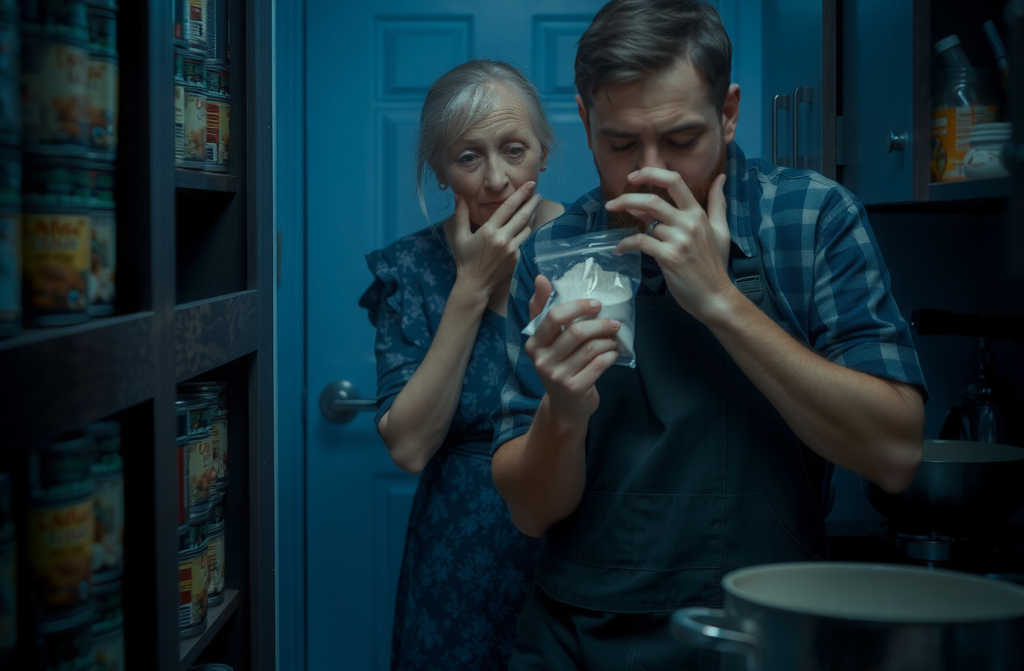
Maggie slipped into the pantry door a second before the lock clicked shut.
She pressed her back against the shelf of tins, felt the inner doorhandle and pulled herself in just enough to leave a sliver no wider than a finger.
Her breathing was shallow and raspy; she cupped her mouth with her hand because the hallway was dead quiet and any sound would have echoed through the whole flat.
The front door swung open.
Jack coughed, stepped into the hall. Through the narrow gap Maggie could see his hands: two white grocery bags bulging with supplies, the ropehandles digging into his fingers.
Mum! he called. Are you home?
Maggie tightened her grip.
***
Maggie had been living alone for five years. When Kolby vanishedsuddenly, as often happens to those who keep their pain hiddenher heart cracked and everything fell apart.
The first year without him was the hardest: it wasnt the grief itself that broke her, she could endure that, but the silence in the flat drove her to the edge. Kolby used to laugh at the television so loudly that every word could be heard in the kitchen.
In the bathroom he would sing shamelessly, mangling both lyrics and melody without a hint of embarrassment. Now, with the bathroom door forever closed, the only sound was the hum of the pipe, and that hum seemed deafening to Maggie.
Her daughter Bridget rushed from Manchester in the first few days. She stayed two weeks: cleaning, cooking, and at night curling up on her mothers bed, simply being there without demanding conversation.
That was precious.
Her son never turned up, neither then nor later. It had been eleven years since Tom vanished, and Maggie had long stopped explaining out loud why, though inside she replayed the events over and over like an old, cracked record.
The story of his disappearance was painful and tangled, as it often is when the truth is buried under the carpet for too long. Tom had been difficult from childhood: sharptempered, quick to flare up over any slight.
He barely got by at school, repeated the sixth year, and left it with threeCs at best. His sister, Bridget, was his opposite: calm, diligent, always bringing home straightAs.
Tom resented his sister, snapped at any criticism, and Kolby sometimes lost his temper, though he tried hard to hold himself together.
When Tom turned nineteen, Kolby sent him to spend the summer with his mother, old Mrs. Claudia, in a village near Oxford. He thought the country work might ground him, let him smell the earth, and freshen him up from city idleness.
Claudia was blunt to a fault, never one to mince words. When Tom made a mistake in the garden, she tossed him a remark:
Honestly, what did you expect, boy?
Tom returned to London that same day, dropped his bag in the hallway, went to the kitchen, sat down and asked in a flat tone:
Is it true?
Maggie looked at Kolby. Kolby looked at her.
They had been waiting for the right moment to tell him themselves, always postponing, convincing each other it was still too early, that he needed to grow a bit more.
The truth, Maggie said, we took you in as a baby when you were eight months old. You screamed so loudly the whole ward shook, but as soon as you saw us you fell silent and stared at me.
I told Kolby then: were yours, theres nowhere else to go.
Tom stood and went to his room. Maggie and Kolby stayed in the kitchen until midnight, talking about everything except that, because they didnt know how to speak of it.
A few days later Tom vanished again, taking the money Maggie and Kolby had been saving for his dorm room, a surprise theyd planned for autumn.
He made his own surprise first.
Kolby hardly spoke of him out loud. In the evenings he would sit by the window for hours, watching the street.
Maggie could see his grief, but she never pressed him for details; Kolby dealt with his pain through silence, and she respected that. A few years later his heart gave out.
Tom returned at the start of April. He knocked gently, didnt ring the bell, just knocked as if unsure anyone would answer.
Maggie opened the door and stood there a moment, staring at a thirtyyearold man with a scruffy beard, slightly stooped, holding a bag of mandarins.
Mum, he said, Im sorry. I was foolish then.
He sounded almost boyish.
She didnt know what to do with herself.
I want to make up for it, he added. If youll give me a chance.
She pulled him into a hug right on the doorstep. He returned the embrace awkwardly, as if hed forgotten how to hold someone after years without it.
At dinner he talked about his work as a chef, travelling the country from Bristol to Newcastle, starting in cheap takeaways and working his way up to respectable restaurants. He really could cook.
Maggie watched him carve a chicken with ease and thought how oddly life works: a man disappears for eleven years and then comes back to fry you a steak.
He stayed on. He reclaimed his old room, arranged his belongings on the shelves, and each morning made porridge or scrambled eggs.
Maggie called Bridget each night.
Did he really come back? Bridget asked, silent on the other end. Hows he holding up?
Fine. Polite. A good cook.
Mum, are you sure everythings okay? Its been eleven years.
Bridget, hes my son. Dont speak to him like a stranger.
She rang relatives across the country, telling them: Tom is back, Tom is home. A cousin from Birmingham laughed on the phone, saying theres no smoke without fire and people dont just stroll back from the wilderness.
Maggie replied that there was no need for drama, everything was fine.
About two weeks later Maggie noticed she was tiring far more than before. By evening her head felt like it was filled with cotton, and she woke up feeling dizzy.
She chalked it up to springtime: a vitamin deficiency, bloodpressure swings, age. At sixty, health is an unreliable companion, and there was nothing specific to blame.
The main thing was that her son was near.
Bridget asked about her health each evening. Maggie said she was okay, a little weary, but it would pass.
Maybe see a doctor? Bridget suggested.
Dont be ridiculous. Im not going to the clinic for every little fatigue. Appointments are weeks away, Ill get over it.
It didnt pass. Nausea grew, her head heavy by lunchtime.
Maggie took vitamins, brewed rosehip tea, and tried not to obsess.
One night she woke before six, the grey April sky outside, the street empty.
Her mouth was so dry she could barely swallow, so she slipped on slippers and headed for the kitchen. She didnt turn the hallway light onshe knew every corner of the flat by heart.
She stopped short of the kitchen.
Tom stood at the stove, a single burner glowing under a pot of porridge.
He held a small clear bag of powder, tipped it into the pot, then stirred with a spoon.
Maggie stepped back down the corridor, reached her bedroom, slipped under the covers and lay awake, eyes open to the ceiling.
A few minutes later the bedroom door creaked. She squeezed her eyes shut, breathing evenly, pretending to sleep, feeling Tom watching her from the doorway.
He lingered, then closed the door, shut the front door with a bang.
Maggie opened her eyes.
Dawn was breaking. She lay there counting dateswhen the sickness began, when the nausea appeared, when that leaden exhaustion settled in. She counted backwards. It lined up exactly with the day Tom moved back and took over cooking.
She rose, dressed, and decided to visit her neighbour, Mrs. Tate, on the third floora sensible woman who didnt waste words and could handle a crisis without tears. Maggie was pulling on her coat in the hallway when the lock clicked.
She didnt even realize she was back in the pantry.
Through the slit she watched Tom pull out his phone and press it to his ear.
Hello? Yes, Im home. He paused. No, the old ladys gone, shes nowhere to be found. He paced the hallway. Dont worry, Ill be right there.
He was almost finished. Just a sec, Ill be there in a minute, love. He muttered, Ill sort the flat quickly, then Im with you.
Maggie stood frozen, hand over her mouth, peering through the crack at her son.
Blimey, I forgot the pharmacy again, he said irritably. Looks like Ill have to pop over again. He cursed. Fine, Ill be there soon, just wait.
The door slammed. Footsteps faded on the stairs.
Maggie emerged from the pantry and stood in the hall, staring at his coat on the rack, his boots by the door, the spare key on the shelf.
The lower lock could only be opened with her own key; shed never given a spare to anyone.
She packed her bag in twenty minutespapers, pension card, a small photograph of Kolby in a frame.
She dialed Bridget.
Mum, why so early? Bridget yawned into the receiver.
Im thinking, love, Ill come over. I miss you.
Come, of course. When?
Today.
Today?! Bridget sat up. And Tom? Let him come too, I want to finally see my brother.
Toms gone off to work elsewhere, hes not around. Ill come alone.
Write me the train number, Ill meet you.
Maggie hung up, slipped Toms belongings shed gathered over the monthseveral shirts, a razor, a battered bookinto his bag and zipped it up.
She left the bag on the landing by the front door.
From her coat pocket she pulled a sheet of paper and a pen. In careful, legible handwriting she wrote:
Tom. I have loved you always, and I will always love you, even if you never deserved it.
Thats why I wont go to the police. But I no longer wish to see you.
Never again. Mother.
She folded the note, placed it atop the bag, closed the door with the lower lock, and slipped the key into her coat pocket.
She caught the bus to Victoria station, rode the Underground, boarded a train and watched her reflection in the dark window instead of the advertisements above the doors.
The train lurched and set off.
She changed at Kings Cross, then took a southbound service to Brighton, where she bought a daytime ticket to York. In the waiting room a man fed pigeons breadcrumbs from a loaf.
The birds pecked and fluttered.
Maggie sat, thinking she would eventually have to tell Bridget everything. Not now, not at the door, but she would. Bridget was smart; she would understand and not shout pointlessly.
She tried not to think about Tom at all. It was hard.
Bridget met her on the platform in York, ran up and hugged her hard before any words were spoken. Maggie pressed her head against her daughters shoulder and closed her eyes.
Mum, Bridget whispered, what happened?
Ill tell you later, Maggie replied. First lets get home.
They walked together down the platform, Bridget carrying her bag, a weak morning sun lighting their path.
Maggie imagined that back in London, on the top shelf of the pantry, a jar of cherry jam from a latesummer August still sat untouched, saved for winter but never opened.
And perhaps it should stay that wayhappiness isnt always found in a jar of jam, but in the quiet strength to let go and move forward.


Rozstanie na jesieni życia w poszukiwaniu partnerki – i odpowiedź, która odmieniła moje życie.

Rozstanie w starszym wieku w poszukiwaniu partnerki – i odpowiedź, która odmieniła moje życieOdpowiedź, którą usłyszałem, sprawiła, że zrozumiałem, iż życie po siedemdziesiątce dopiero się zaczyna.

Julia poleciała dzień wcześniej niż pozostali na jubileusz swojej teściowej, a gdy właśnie siadała w fotelu samolotu, wzdrygnęła się – ktoś niespodziewanie zawołał ją po imieniu…

Julia przyleciała dzień wcześniej na jubileusz swojej teściowej niż pozostali, a gdy właśnie usiadła w fotelu samolotu, wzdrygnęła się – ktoś niespodziewanie zawołał ją po imieniu…

Julia poleciała dzień wcześniej niż pozostali na jubileusz teściowej, a gdy tylko usiadła w fotelu samolotu, wzdrygnęła się – ktoś niespodziewanie zawołał ją po imieniu…

Julia poleciała dzień wcześniej na jubileusz teściowej niż pozostali, a gdy właśnie usiadła w fotelu samolotu, wzdrygnęła się – ktoś niespodziewanie zawołał ją po imieniu…

Gdy moja teściowa dowiedziała się, że chcemy kupić mieszkanie, wzięła mojego męża na stronę. To, co się potem wydarzyło, wstrząsnęło mną do głębi.

Gdy moja teściowa dowiedziała się, że chcemy kupić mieszkanie, wzięła mojego męża na bok. To, co się potem stało, wstrząsnęło mną do głębi.

Jego kpiny stały się jego zgubą – teraz je w mojej kuchni dla potrzebujących.

Jego kpiny okazały się jego zgubą – teraz je w mojej kuchni dla potrzebującychI patrzyłem, jak przełyka gorzką zupę, a w jego oczach gasła ostatnia iskra dawnej pychy.

Część 2: Teściowa oblała mnie wrzącym olejem za odmowę oddania im mojego spadku – mąż uśmiechnął się i zażądał rozwoduW szpitalu, patrząc na swoje poparzone dłonie, wiedziałam, że to nie ja straciłam rodzinę, ale oni stracili mnie na zawsze.

– Ludka, tylko nie padnij… Twój mąż wczoraj młodą z porodówki witał! – wypaliła sąsiadkaLudka poczuła, jak ziemia usuwa jej się spod nóg, ale zamiast upaść, wyprostowała się i spojrzała sąsiadce prosto w oczy z kamienną twarzą.

— Olu, pieniądze z naszego konta wydałem ja.

Mąż zamienił mnie na młodszą i kazał matce pilnować, żebym nie wyniosła rzeczy z jego mieszkania. Ale to on został z niczym.

„Mama żyje z moich pieniędzy” – te słowa zmroziły mnie z przerażenia.

Irena nie patrzyła na nakryty stół, nie na miski z sałatką, nie na drewnianą deskę z resztkami chleba ani na wielki garnek, z którego synowa już nakładała sobie drugą porcję. Patrzyła tylko na swojego męża. Sergiusz siedział na skraju stołu, lekko pochylony, z łokciami obok cukiernicy. Na widok żony nie wstał, nie speszył się i nawet nie próbował udawać, że wszystko stało się przypadkiem. Tylko powoli przeciągnął dłonią po brodzie i odwrócił wzrok w bok, jakby liczył, że Irena najpierw sama rozprawi się z jego rodziną, a z nim porozmawia kiedy indziej. To właśnie ta obojętna pewność siebie drażniła ją najbardziej. Irena wróciła do domu znacznie później niż zwykle. Tego wieczoru musiała wstąpić do serwisu, żeby odebrać telefon po wymianie szkła, potem wpadła do sklepu z artykułami gospodarstwa domowego po nowe filtry do wody, a pod klatką schodową czekała jeszcze dziesięć minut, aż sąsiadka rozładuje windę.

– Chyba wiesz, że dziecko może być nie twoje? – zjadliwie rzuciła teściowa do syna w kuchni.

„Nie będę już wam pomagać – wasz syn odszedł do innej, niech teraz ta pani was utrzymuje” – oświadczyła teściowej Irena.

Krótkie szczęście babciGdy wnuczka wreszcie przyszła z wizytą, babcia zapomniała o wszystkich swoich troskach.

— Zamieszkasz na wsi u moich rodziców. Będziesz ich doglądać, — rozkazał mąż.
Rozstanie na jesieni życia w poszukiwaniu partnerki – i odpowiedź, która odmieniła moje życie.
Rozstanie w starszym wieku w poszukiwaniu partnerki – i odpowiedź, która odmieniła moje życieOdpowiedź, którą usłyszałem, sprawiła, że zrozumiałem, iż życie po siedemdziesiątce dopiero się zaczyna.
Julia poleciała dzień wcześniej niż pozostali na jubileusz swojej teściowej, a gdy właśnie siadała w fotelu samolotu, wzdrygnęła się – ktoś niespodziewanie zawołał ją po imieniu…
Julia przyleciała dzień wcześniej na jubileusz swojej teściowej niż pozostali, a gdy właśnie usiadła w fotelu samolotu, wzdrygnęła się – ktoś niespodziewanie zawołał ją po imieniu…
Julia poleciała dzień wcześniej niż pozostali na jubileusz teściowej, a gdy tylko usiadła w fotelu samolotu, wzdrygnęła się – ktoś niespodziewanie zawołał ją po imieniu…
Część 2: Teściowa oblała mnie wrzącym olejem za odmowę oddania im mojego spadku – mąż uśmiechnął się i zażądał rozwoduW szpitalu, patrząc na swoje poparzone dłonie, wiedziałam, że to nie ja straciłam rodzinę, ale oni stracili mnie na zawsze.
– Ludka, tylko nie padnij… Twój mąż wczoraj młodą z porodówki witał! – wypaliła sąsiadkaLudka poczuła, jak ziemia usuwa jej się spod nóg, ale zamiast upaść, wyprostowała się i spojrzała sąsiadce prosto w oczy z kamienną twarzą.
— Olu, pieniądze z naszego konta wydałem ja.
Mąż zamienił mnie na młodszą i kazał matce pilnować, żebym nie wyniosła rzeczy z jego mieszkania. Ale to on został z niczym.
„Mama żyje z moich pieniędzy” – te słowa zmroziły mnie z przerażenia.
-

 Ciekawostki3 lata ago
Przyszła synowa została u nas na noc. Rano odwiedziła nas moja siostrzenica i okazało się, że ona i narzeczona syna się znają. A następnego dnia przyjechała jego przyszła teściowa razem z córką i urządziły straszną awanturę. Z jakiegoś powodu moja siostrzenica powiedziała synowej, że ja i mój mąż nie będziemy im pomagać po ślubie i jeszcze że chcemy sprzedać samochód naszego syna. W rezultacie ślub się nie odbył
-

 Ciekawostki4 lata ago
Brat przybiegł wcześnie rano, jak tylko dowiedział się, co zrobili rodzice
-

 Rodzina5 lat ago
Obaj moi synowie są żonaci. Moje synowe diametralnie się od siebie różnią – jedna siedzi z telefonem na kanapie, a druga szykuje jedzenie dla wszystkich. Ilona mieszka z nami i nie chce jej się nic robić. Pewnego dnia nie mogłam się powstrzymać i ją zawstydziłam, mówiąc, że u niej zawsze jest brudno. Teraz nikt w domu ze mną nie rozmawia
-

 Historie4 lata ago
„To u was można brać prysznic dłużej niż 30 minut?” – usłyszałam od koleżanki, która mieszka w Niemczech