
Uncategorized
Between Two Fires
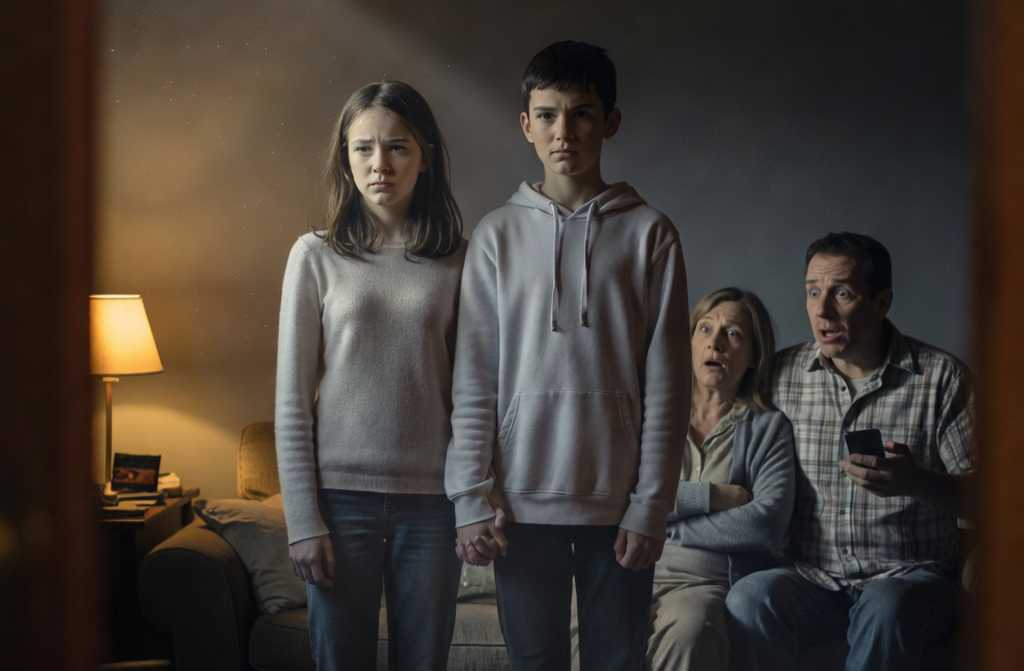
„What on earth is wrong with you this time?! How much more of this can I take?! I’ve had enough!” the woman’s voice carries from behind the door of one flat and echoes through the whole building.
Right now Emily and Oliver are climbing the stairs. They stop dead, as if they’ve walked into an invisible barrier. Their eyes meet for a second and no words are needed. Both know without speaking: it’s better to leave. They sigh together, turn around and walk quietly away from the block. Clearly they have no intention of going back to their flat today.
Who would choose to spend the evening listening to parents argue without end? Not them. The teenagers stride towards the neighbouring block where their gran Margaret lives. Her flat has become their refuge lately. They used to visit only at weekends, but now they find shelter there almost every night.
The atmosphere at home has grown unbearable. The parents seem to have forgotten everything else and shout at each other constantly. Worst of all, they drag the children into the rows more and more.
Sometimes the mother turns to her daughter and demands, „Tell me I’m right. You agree with me, don’t you?”
Other times the father cuts in before any answer and turns to his son, „No, I’m right here. Back me up!”
Emily and Oliver stay quiet. They refuse to pick sides or join the endless conflict. They simply want peace and warmth, the things they find at their gran’s.
These scenes happen day after day, like a stuck record no one will lift the needle on. The children have learned to read the signs: the tone of voice, the sharp movements, the quick glances between their parents. All of it means it’s time to go. Who would want to live in constant tension where any talk can explode into a row in seconds?
The teenagers still cannot work out what started the disaster. Their family was never perfect, nothing like the ones in adverts, but the parents used to know how to sort things out. Rows happened, of course, yet they ended in calm talks rather than shouting. Mum might frown, dad might raise his voice a little, but half an hour later everything was settled. Everyone would sit down again, drink tea and plan the weekend.
Roughly two years ago everything changed. It felt as if someone had swapped the old parents for new ones who found reasons to argue over the smallest things. A dirty mug left on the table? A long lecture on carelessness and disrespect. A shirt hung on the wrong hook? Sarcastic remarks about the state of the house. A teaspoon forgotten in the sink? Almost a crime that needed a full investigation.
One evening Emily sits at the kitchen table in her gran’s flat, stirring her tea without thinking. She stays quiet for a while, watching the amber swirls, then asks with sudden bitterness, „How did it get like this, Gran? Everything changed after their holiday together. What happened there?”
Margaret pauses, sets her cup down and gently touches Emily’s hand. She only has her own guesses about the family rift and those guesses bring her no comfort.
„The adults will work it out,” she answers softly, trying to sound sure. „Sometimes people need time to decide what’s best.”
Emily nods but doubt shows in her eyes. She knows her gran is holding something back, yet she does not push. What would be the point? While they still see her as a child, they will not share anything serious.
„We can’t stand the shouting anymore!” Oliver bursts out. „We can’t do homework or read a book in peace. I can’t even remember the last time we all sat at the table together. If it’s so hard for them to live together, they should just divorce and make it easier for everyone!”
The words tumble out, but they carry the truth of the last months. Oliver speaks for both of them; he knows his sister feels the same. There has been no quiet in their home for a long time. Mum says something sharp, dad answers with irritation, and another row begins with nowhere to hide.
„Oliver…” Gran looks startled. She puts her knitting aside, studies her grandson and slowly shakes her head. „Have you thought about what happens if they divorce? You’ll be split up. Are you ready to live apart from Emily?”
„We’ll live with you!” Emily says at once, looking at her gran with pleading eyes. „We spend nearly all our time here anyway. You don’t mind, do you?”
Margaret stays still. She understands how hard it is for them and how tired they are of the constant rows. On one side, the children would be safe here in a calm home where they can do homework without shouting and feel protected. She loves them deeply and is ready to care for them.
On the other side, what about their parents? How would they explain that the children no longer want to live at home? Would the parents agree? And if they did, how would it affect the relationship with the children? Could it lead to a complete break?
„Let’s not rush,” Margaret says with a deep breath. „I’m always glad to have you here, you know that. But first let’s try talking to your mum and dad. Maybe together we can find a way to put things right.”
„Don’t worry, we’ll speak to them ourselves,” Emily says with confidence, smiling. Gran has almost agreed and that matters most. „Just don’t turn us down, please. We really can’t stay there any longer. And it would be better for them apart, otherwise one day they might actually hurt each other. I saw dad raise his hand to mum yesterday. He didn’t hit her, honestly, but he was on the edge.”
Emily falls silent, remembering that moment. She had gone to the kitchen for water and stopped in the doorway. Her father stood half-turned towards her mother, his hand suddenly lifting, and mum ducked on instinct. A second later he lowered it, yet that second had stretched into forever for Emily.
„Gran, say yes!” Oliver adds. He steps closer and takes his grandmother’s hand as though afraid she will refuse. „We’ll help you with everything around the house. Just don’t send us back. They barely notice us. Yesterday I told dad about parents’ evening. You know what he said? 'Ask your mum.’ So I did. Guess what she told me?”
„Go and ask your dad?” Margaret asks quietly, already knowing.
„Exactly!” Oliver smiles bitterly. „Then they argued for two more hours about who should go. They sat in separate rooms and shouted across the hallway. I just stood there listening.”
„And I asked them to sign the form for the museum trip,” Emily adds, eyes down. Her fingers twist the edge of her sleeve. „Now I’m the only one in the class who won’t go. Neither of them signed it. Instead they started rowing again. Mum shouted that it’s dad’s job and dad insisted mum should handle school things.”
Margaret watches her grandchildren and sees how worn out they are. The tiredness in their eyes is not childish; it has built up over months when every day feels the same, when family warmth has been replaced by constant rows and support has turned to indifference.
„It’s always like this,” Oliver sighs, shoulders dropping. His voice sounds exhausted, as if he has said it hundreds of times. „Any request from us turns into another row. We don’t even want to come home anymore. A couple of nights ago we got back at eleven and they didn’t even tell us off. They just sent us to bed without asking where we’d been. Then they spent ages blaming each other for bad parenting.”
The teenagers sigh together again. In recent months they have seriously considered that their parents’ divorce is the only escape. Yet they fear the separation from each other that would follow. One would stay with mum, one with dad, and their closeness would shrink to rare weekend visits.
They talk options in whispers at night when they are alone in their room. Once Oliver joked about running away, just grabbing backpacks and heading off. He smiled to lighten the mood, but Emily took it seriously. Her eyes lit up for a moment before she said quietly, „What if we really left? Even for a couple of days?” In that instant both realised the family situation had become so bad that even the idea of running away no longer seemed mad.
Then the thought strikes them: gran. Why not move in with her? The idea comes to both at the same moment. Emily says it first. „Let’s ask gran if we can live here. She won’t shout or argue and we won’t have to listen to the rows anymore.” Oliver jumps in at once. „Yes! She’s kind and always backs us. Her flat is big enough for all of us.”
They begin to picture the new life: quiet breakfasts, homework without noise, evenings playing board games with gran. No shouting, no blame, no hiding in their room. For the first time in ages hope stirs. Let the parents sort themselves out while they finally find peace. That is what Emily and Oliver think as they imagine living with their gran.
„Mum, dad, we need to talk seriously,” the twins say firmly, standing before their parents. They waited until both were home and walked straight into the living room. Emily grips Oliver’s hand tightly to steady herself. „But first promise you’ll hear us out before you say anything.”
James looks up from his phone, surprised. Sarah, sorting clothes on the sofa, straightens at once. Her face shows she cannot believe what she has just heard.
„This is all your fault!” she snaps, folding her arms. „The children are already giving us orders! As if we have to answer to them!”
„Look who’s talking!” James fires back, putting his phone down. „I’m always at work trying to keep this family going. You’ve been with them the whole time. What exactly have you taught them? Why are they telling us what to do now?”
The twins glance at each other. They expected the talk to slide straight into the usual accusations, but they cannot back down.
„Stop!” Emily cries, her voice close to tears. She steps forward and tries to speak clearly even though she is shaking inside. „Oliver and I have decided you should get divorced.”
The room goes silent. Sarah freezes with her mouth open and James rises slowly from the sofa.
„Well that’s news!” the mother’s voice sounds dangerous. „Emily, you’re far too young to tell adults how to live their lives. And what else have you 'decided’? Maybe you’ll split the flat for us as well?”
„If you don’t divorce we’ll go to social services,” Oliver says, squeezing his sister’s hand for strength. His voice stays steady though he hardly believes he is saying it. „Then you could lose your job, dad. Your firm doesn’t like scandals, does it? You’ve said yourself that reputation is everything.”
„And you, mum,” Emily continues, meeting her mother’s eyes, „the neighbours will stop respecting you. They won’t even speak to you. Everyone already knows how you shout at each other and we’ll fill in the details.”
„They’re threatening us! Look at them!” Sarah finally gets out, looking from one child to the other. „These are our children! How can you speak to us like this?”
„We’re not threatening,” Oliver says quietly but clearly. „We just want you to see that this cannot go on. We’re tired of the shouting, of you not listening, of every simple request turning into a row.”
„You’ll divorce and move apart and we’ll live with gran,” the twins finish together as though they rehearsed it. „It will be better for everyone. We’ll have peace and you’ll have no more fights. We don’t want to be stuck in the middle any longer.”
The parents stay frozen. For the first time in ages they have no answer ready. Normally they would start arguing at once, interrupting and blaming, but now both seem unable to speak.
Their thirteen-year-old children are behaving in a way no one expected. Emily and Oliver stand side by side holding hands, looking at their parents with steady eyes and no usual shyness. They are talking about serious matters the adults have tried to avoid thinking about.
The couple have considered divorce many times themselves. They have always been stopped by the same question: who would the children live with? Splitting the twins feels impossible. They are so close, always together, always supporting each other. The parents cannot imagine forcing them into separate homes and seeing each other only at weekends.
The idea of gran had never occurred to them before. Perhaps they were too wrapped up in their own hurts and complaints. Now, hearing the children’s suggestion, James and Sarah wonder if this could be the answer. Gran loves the grandchildren, her flat is spacious and she is always pleased to see them. Maybe this would solve part of the problem.
„I’ll ring mum,” James says at last through his teeth. His voice sounds rough. „If she agrees…”
He does not finish. Sarah cuts in, and the tiredness in her voice surprises even her. „Then we can finally stop hurting each other. Ring her. I’ll be glad not to see your face every day.”
Her words hang in the air. She had not meant to sound so sharp, but years of stored pain had pushed them out.
„And I’ll be over the moon!” James answers, hiding the hurt behind sarcasm.
There is no anger in his tone, only a bitter smile at what their life has become. He takes out his phone and slowly dials his mother’s number. While it rings, both spouses look away from each other. They do not yet know where this will lead, but they sense the point of no return may already have been crossed.
That day the Harrington family reaches a turning point. It begins with a long talk between James and his mother. Margaret listens without interrupting, only asking the occasional question.
When James finishes, a pause follows. Gran takes a deep breath and says, „If you both believe this is better for the children, I agree. They will be safe here and I will look after them.”
By evening the couple sit in the kitchen for the first time in a long while without shouting or blame. They face each other and begin to work through the details. Step by step they reach the same conclusion: divorce is the only sensible way forward. The children will move to gran’s and the parents will send her money each month in pounds for their upkeep.
Neither plans to abandon the children. Both promise to visit at weekends, but on different days to avoid contact with each other.
„I’ll come on Saturday mornings and take them out, and you can come on Sundays,” James says wearily. His wife, still for now, nods. „That will keep things simpler. The main thing is they don’t feel left behind.”
Their aim is to keep contact to a minimum and avoid fresh rows. They agree not to discuss each other in front of the children, not to pull them to one side and not to argue when the children are present.
„We’re still their parents,” James says. „We have to stay that way even if we are no longer husband and wife.”
Time proves the decision right. The children finally relax and begin to live like ordinary teenagers. Emily joins an art club she has wanted for ages but never had the chance because of the constant worry. Oliver takes up football and makes new friends in the team. They spend time together again, walking through the city, going to the cinema and talking about school without fear of a row breaking out.
Their studies settle too. They now have a quiet place to work without shouting or arguments. Homework gets done calmly and their marks improve at once. Teachers notice. „You’ve become so focused, you two. Keep it up.”
Life settles into a steady pattern, not perfect but calm and predictable. The children no longer hide in their room, jump at loud voices or worry about every step. They simply live as teenagers should when they have found support in difficult times.
Five years later life for the Harrington family moves steadily and calmly. Emily and Oliver have grown used to the new routine: studies, clubs, time with friends and warm evenings with gran. The parents still visit on separate days, each on their own day, bringing gifts and attention but no complaints. Over the years they have learned to speak to each other politely and without the old flashes of anger.
The first real meeting between the former couple happens at the children’s prom. The school holds a formal evening and both parents attend. They sit apart at first, but as the night goes on the distance shrinks.
When the dancing begins James walks over to Sarah. „Would you like to dance? For old times’ sake.”
She hesitates, then nods.
After the evening they sit for a long time in the school yard watching the leavers by the fountain. Talk starts easily, first about the children, then about the past. They speak of good memories from their marriage and behave with dignity. They avoid old grudges and focus on what once connected them. The twins watch from a distance and feel a quiet relief, though it still hurts to see two people they love treat each other almost like strangers.
Then, without warning, everything shifts. The next day James and Sarah invite the children to a café. Over tea they take each other’s hands and James smiles widely. „We’ve thought about it and decided to get married again. Over these years we’ve seen that our feelings never faded. We still love each other and want to be a family once more.”
His voice sounds joyful, as if sharing the best news. Sarah beams, clearly hoping for excitement.
The twins look at each other, faces darkening at once. Doubt crosses Emily’s eyes and Oliver’s hands tighten under the table. Not again. What are their parents thinking? Can they really live together without rows?
„Are you serious?” Emily manages.
„Completely,” James answers with confidence. „We’ve both changed. We’ve learned to listen. We want to give our family another chance.”
The children stay silent. Conflicting feelings swirl inside them. Part of them wants to believe the parents have truly changed, yet another part fears the old pain returning.
Emily and Oliver do not argue against it. They offer no comment at all, which clearly disappoints their parents. Sarah looks at them in confusion. „Aren’t you pleased? We thought you’d be happy for us.”
The twins only glance at each other and shrug. What can they say? „Don’t do this. Don’t ruin your lives again”? The words stay stuck. They do not want to seem heartless, yet they cannot pretend everything is fine.
The rest of the meeting drags. The parents talk about plans, the children nod politely, but their thoughts are elsewhere. On the way home Emily says quietly to her brother, „I hope they know what they’re doing.”
Oliver only sighs.
„So we’re applying to universities in London?” Emily opens her laptop and begins scrolling through university sites. „Far enough from this mess. I can already picture how this circus will finish.”
„Of course we are,” Oliver says firmly. There is a tiredness in his voice that does not belong to someone his age. He pushes a hand through his hair as though trying to shed the weight of the last months. „They’ll manage a month, maybe two. Then it will start again: shouting, doors slamming, blame flying. I refuse to be trapped by their relationship any longer. I don’t want to wake up every morning wondering what mood they’re in and who will catch the next wave of complaints.”
He stands and walks the room, gathering scattered books without thinking. The same thought keeps returning: why do adults who should show wisdom and steadiness behave like out-of-control teenagers? Why do they keep repeating the same mistakes instead of fixing what is broken?
„We need to go,” he repeats, stopping at the window. Dusk is falling outside, turning the city soft orange. Oliver gazes into the distance as if trying to see his own future there. „Far away. So far their rows cannot touch us. Let them sort themselves out. We’re not their counsellors, go-betweens or punchbags anymore. We have our own lives and dreams and I will not let them destroy them with another round of parental chaos.”
„When do we send the applications?” Emily asks calmly.
„Tomorrow,” Oliver replies without pause. „So we can’t change our minds.”
She nods without looking up from the screen. Pages from London university sites move across the monitor. For a week she has studied courses, accommodation in halls and job chances after graduation. Beside the laptop her notebook fills with lists: pros and cons, documents needed, deadlines and contact names for admissions.
„The main thing is to study without being pulled into their dramas,” she says quietly, as if closing her thoughts. „It’s good we’ll be so far away.”
„Exactly,” Oliver agrees, sitting beside her. He leans in to read the screen. „When they start arguing again about who’s to blame we won’t even hear it. Let them ring and complain and try to drag us into family meetings. We’re not taking part anymore. And their wish to 'give the relationship another chance’,” he smiles without warmth, „that’s their choice, not ours.”
Sarah and James go through with the second wedding. This time they skip any big celebration. They want no extra cost, no attention and honestly feel no need for anything grand. They keep it to a simple ceremony at the registry office and a meal with close family, parents, a few friends and the children.
In the photos they look genuinely happy. Smiling, holding hands, looking at each other with warmth. Their fingers are linked, their glances soft. It seems all old hurts are forgotten, that time apart has helped and that they now know what they want with only good things ahead. The children looking at the pictures wonder whether this time might really be different.
But it is not. The first weeks after the wedding pass quietly. The couple try to be kinder, say thank you more often and avoid small niggles. Yet old habits soon return. After a month raised voices sound in the flat again. At first they are quiet but sharp remarks: „You left that out again?” „Why didn’t you say you’d be late?” „You could help since you’re home.”
Then open rows begin. Arguments flare over nothing: wet towels in the bathroom, forgotten bread, the television too loud. Words grow harder, voices louder and the gaps between rows shorter.
Two months later, exactly as Oliver predicted, things reach breaking point. One evening a row over who should shop for food turns into a storm. James, losing control, hurls a cup at the wall. It smashes loudly and pieces scatter across the kitchen. Sarah, equally furious, grabs a plate and slams it onto the floor. The sound of breaking china echoes through the flat.
After scenes like these the parents always ring the children. Each call begins the same way. One of them dials while still breathless and pours out the latest grievances.
„Can you believe what he said today?” Sarah sobs when Emily answers. „He doesn’t even try to understand me!”
„Son, you have to see my side. She has no control at all,” James tells Oliver in an agitated voice. „I’m trying, I really am, but she looks for excuses!”
Emily and Oliver have learned to cut these calls short, gently but firmly. They no longer let themselves be drawn into long debates or decide who is right. Their answers stay short and steady.
„Mum, I’m in a lecture, I’ll ring later,” Emily says calmly, checking the clock. Twenty minutes remain before class but she has no wish to hear another outpouring.
„Dad, I’ve got urgent work, let’s talk at the weekend,” Oliver answers without lifting his eyes from his screen. He knows that letting a parent vent will stretch the call to an hour and then he will have to calm them down.
„Later” and „at the weekend” keep being postponed. The children offer excuses: lectures, part-time work, time with friends. Calls from the parents grow rarer. Emily and Oliver feel no guilt. They are simply guarding their own peace and time, knowing they cannot change what happens between their mother and father.
The twins now have lives of their own, full and far from parental storms. Their days are shaped by their own concerns, interests and plans, not by waiting for the next row next door.
Emily has thrown herself into psychology. She enjoys learning how minds work, why people act as they do and how to help those in trouble. In her third year she begins volunteering at a centre for teenagers from difficult homes. She runs group sessions, helps the young people name their feelings and find ways through hard situations. She sees reflections of her own past in them and tries to offer what she once lacked: attention, support and the sense that someone is listening.
Oliver has found his place in IT. From his first year he has been drawn to programming, fascinated by the logic of code and the chance to build systems that work and solve real problems. He spends hours at the computer, learns new languages and joins student hackathons. In his fourth year his team places third in a regional contest for mobile app development. The result gives him confidence and confirms he is heading the right way. He takes a part-time job at a small IT firm where he quickly proves reliable and skilled. Working on live projects teaches him to deal with colleagues, manage time and find answers in unexpected situations.
The twins plan their future without reference to their parents’ rows. Emily dreams of opening her own practice and helping families communicate better. Oliver thinks about starting his own business. They discuss ideas over tea in cafés, sketch plans and note thoughts in notebooks. In those moments they feel they have support, a direction and a life that belongs only to them.
When Sarah and James try once more to pull them in, ringing in tears and describing how badly things are going and how little they understand each other, the twins answer calmly and clearly. They have already agreed how to handle the call so they do not snap or slip back into the old role of go-betweens.
„That’s enough, Mum and Dad. Sort it out yourselves,” Emily says firmly. „You have your life. We have ours.”
„But you’re our children!” Sarah cries. „You have to support us!”
„If you acted like adults instead of children we’d support you,” Oliver replies at once. „You made a mistake remarrying and you keep hurting each other. You can’t live together without fighting, so why keep doing it? Get divorced and move apart.”
The words may sound harsh, yet the brother and sister simply want to live in peace.


Rozstanie na jesieni życia w poszukiwaniu partnerki – i odpowiedź, która odmieniła moje życie.

Rozstanie w starszym wieku w poszukiwaniu partnerki – i odpowiedź, która odmieniła moje życieOdpowiedź, którą usłyszałem, sprawiła, że zrozumiałem, iż życie po siedemdziesiątce dopiero się zaczyna.

Julia poleciała dzień wcześniej niż pozostali na jubileusz swojej teściowej, a gdy właśnie siadała w fotelu samolotu, wzdrygnęła się – ktoś niespodziewanie zawołał ją po imieniu…

Julia przyleciała dzień wcześniej na jubileusz swojej teściowej niż pozostali, a gdy właśnie usiadła w fotelu samolotu, wzdrygnęła się – ktoś niespodziewanie zawołał ją po imieniu…

Julia poleciała dzień wcześniej niż pozostali na jubileusz teściowej, a gdy tylko usiadła w fotelu samolotu, wzdrygnęła się – ktoś niespodziewanie zawołał ją po imieniu…

Julia poleciała dzień wcześniej na jubileusz teściowej niż pozostali, a gdy właśnie usiadła w fotelu samolotu, wzdrygnęła się – ktoś niespodziewanie zawołał ją po imieniu…

Gdy moja teściowa dowiedziała się, że chcemy kupić mieszkanie, wzięła mojego męża na stronę. To, co się potem wydarzyło, wstrząsnęło mną do głębi.

Gdy moja teściowa dowiedziała się, że chcemy kupić mieszkanie, wzięła mojego męża na bok. To, co się potem stało, wstrząsnęło mną do głębi.

Jego kpiny stały się jego zgubą – teraz je w mojej kuchni dla potrzebujących.

Jego kpiny okazały się jego zgubą – teraz je w mojej kuchni dla potrzebującychI patrzyłem, jak przełyka gorzką zupę, a w jego oczach gasła ostatnia iskra dawnej pychy.

Część 2: Teściowa oblała mnie wrzącym olejem za odmowę oddania im mojego spadku – mąż uśmiechnął się i zażądał rozwoduW szpitalu, patrząc na swoje poparzone dłonie, wiedziałam, że to nie ja straciłam rodzinę, ale oni stracili mnie na zawsze.

– Ludka, tylko nie padnij… Twój mąż wczoraj młodą z porodówki witał! – wypaliła sąsiadkaLudka poczuła, jak ziemia usuwa jej się spod nóg, ale zamiast upaść, wyprostowała się i spojrzała sąsiadce prosto w oczy z kamienną twarzą.

— Olu, pieniądze z naszego konta wydałem ja.

„Mama żyje z moich pieniędzy” – te słowa zmroziły mnie z przerażenia.

Mąż zamienił mnie na młodszą i kazał matce pilnować, żebym nie wyniosła rzeczy z jego mieszkania. Ale to on został z niczym.

Irena nie patrzyła na nakryty stół, nie na miski z sałatką, nie na drewnianą deskę z resztkami chleba ani na wielki garnek, z którego synowa już nakładała sobie drugą porcję. Patrzyła tylko na swojego męża. Sergiusz siedział na skraju stołu, lekko pochylony, z łokciami obok cukiernicy. Na widok żony nie wstał, nie speszył się i nawet nie próbował udawać, że wszystko stało się przypadkiem. Tylko powoli przeciągnął dłonią po brodzie i odwrócił wzrok w bok, jakby liczył, że Irena najpierw sama rozprawi się z jego rodziną, a z nim porozmawia kiedy indziej. To właśnie ta obojętna pewność siebie drażniła ją najbardziej. Irena wróciła do domu znacznie później niż zwykle. Tego wieczoru musiała wstąpić do serwisu, żeby odebrać telefon po wymianie szkła, potem wpadła do sklepu z artykułami gospodarstwa domowego po nowe filtry do wody, a pod klatką schodową czekała jeszcze dziesięć minut, aż sąsiadka rozładuje windę.

– Chyba wiesz, że dziecko może być nie twoje? – zjadliwie rzuciła teściowa do syna w kuchni.

„Nie będę już wam pomagać – wasz syn odszedł do innej, niech teraz ta pani was utrzymuje” – oświadczyła teściowej Irena.

Krótkie szczęście babciGdy wnuczka wreszcie przyszła z wizytą, babcia zapomniała o wszystkich swoich troskach.

— Zamieszkasz na wsi u moich rodziców. Będziesz ich doglądać, — rozkazał mąż.
Rozstanie na jesieni życia w poszukiwaniu partnerki – i odpowiedź, która odmieniła moje życie.
Rozstanie w starszym wieku w poszukiwaniu partnerki – i odpowiedź, która odmieniła moje życieOdpowiedź, którą usłyszałem, sprawiła, że zrozumiałem, iż życie po siedemdziesiątce dopiero się zaczyna.
Julia poleciała dzień wcześniej niż pozostali na jubileusz swojej teściowej, a gdy właśnie siadała w fotelu samolotu, wzdrygnęła się – ktoś niespodziewanie zawołał ją po imieniu…
Julia przyleciała dzień wcześniej na jubileusz swojej teściowej niż pozostali, a gdy właśnie usiadła w fotelu samolotu, wzdrygnęła się – ktoś niespodziewanie zawołał ją po imieniu…
Julia poleciała dzień wcześniej niż pozostali na jubileusz teściowej, a gdy tylko usiadła w fotelu samolotu, wzdrygnęła się – ktoś niespodziewanie zawołał ją po imieniu…
Część 2: Teściowa oblała mnie wrzącym olejem za odmowę oddania im mojego spadku – mąż uśmiechnął się i zażądał rozwoduW szpitalu, patrząc na swoje poparzone dłonie, wiedziałam, że to nie ja straciłam rodzinę, ale oni stracili mnie na zawsze.
– Ludka, tylko nie padnij… Twój mąż wczoraj młodą z porodówki witał! – wypaliła sąsiadkaLudka poczuła, jak ziemia usuwa jej się spod nóg, ale zamiast upaść, wyprostowała się i spojrzała sąsiadce prosto w oczy z kamienną twarzą.
— Olu, pieniądze z naszego konta wydałem ja.
„Mama żyje z moich pieniędzy” – te słowa zmroziły mnie z przerażenia.
Mąż zamienił mnie na młodszą i kazał matce pilnować, żebym nie wyniosła rzeczy z jego mieszkania. Ale to on został z niczym.
-

 Ciekawostki3 lata ago
Przyszła synowa została u nas na noc. Rano odwiedziła nas moja siostrzenica i okazało się, że ona i narzeczona syna się znają. A następnego dnia przyjechała jego przyszła teściowa razem z córką i urządziły straszną awanturę. Z jakiegoś powodu moja siostrzenica powiedziała synowej, że ja i mój mąż nie będziemy im pomagać po ślubie i jeszcze że chcemy sprzedać samochód naszego syna. W rezultacie ślub się nie odbył
-

 Ciekawostki4 lata ago
Brat przybiegł wcześnie rano, jak tylko dowiedział się, co zrobili rodzice
-

 Rodzina5 lat ago
Obaj moi synowie są żonaci. Moje synowe diametralnie się od siebie różnią – jedna siedzi z telefonem na kanapie, a druga szykuje jedzenie dla wszystkich. Ilona mieszka z nami i nie chce jej się nic robić. Pewnego dnia nie mogłam się powstrzymać i ją zawstydziłam, mówiąc, że u niej zawsze jest brudno. Teraz nikt w domu ze mną nie rozmawia
-

 Historie4 lata ago
„To u was można brać prysznic dłużej niż 30 minut?” – usłyszałam od koleżanki, która mieszka w Niemczech